Tailings Pond Liner: Selection & Installation
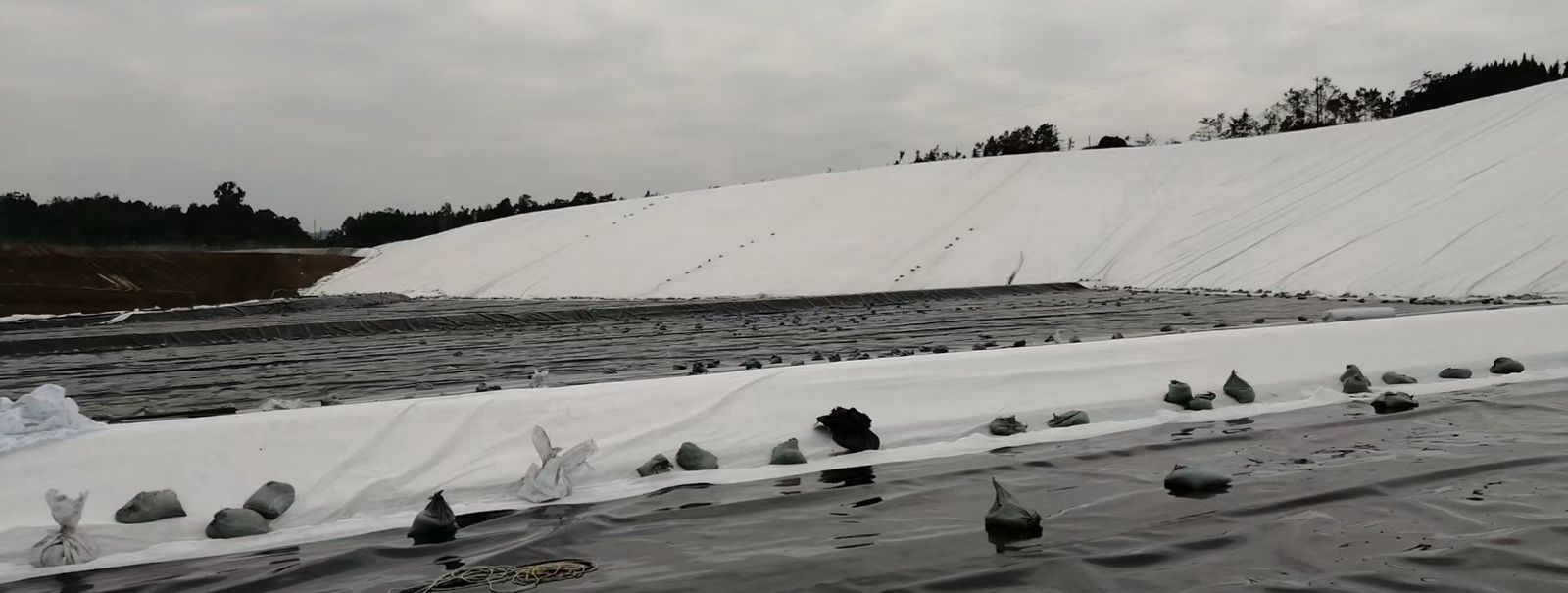
Tailings ponds are high-consequence structures: a failed liner means contaminated groundwater and regulator action. This guide covers the HDPE geomembrane specification and installation practice that mining operators and EPC contractors use — thickness, textured liner on slopes, welding, anchoring and inspection.
1Liner Specification for Tailings Service
| Condition | Recommended | Notes |
|---|---|---|
| Floor / basin (flat or gentle) | 1.5 mm smooth HDPE | GB/T 17643, virgin resin |
| Slopes steeper than 1:2.5 | 1.5–2.0 mm textured HDPE | Textured surface for slip resistance |
| Aggressive liquor (acid/alkali, high TDS) | 2.0–2.5 mm HDPE | Thicker = longer chemical service life |
| High groundwater / sensitive receptors | Add GCL secondary liner | Composite double-barrier system |
All HDPE liner should be virgin resin — recycled material degrades unpredictably under UV and chemical load, and a tailings pond is the last place you want an early failure.
2Textured vs Smooth: Where and Why
- Textured liner on the dam face and side slopes: the raised texture interlocks with the cover soil, preventing the liner sliding down under the weight of tailings and rain.
- Smooth liner on the floor: cheaper, easier to weld and repair; slip is not an issue on flat ground.
- Many projects mix both: textured slope + smooth floor — the most economical safe design.
- Confirm the interface friction angle with the geotechnical designer for slopes over 1:2.
3Subgrade Preparation
- Compact and level the floor with 1–2% drainage slope toward the reclaim sump.
- Remove stones above 10 mm; on rocky subgrade lay a 400–600 g/m² geotextile cushion.
- On the dam face, trim and compact in 300 mm lifts so no rock or root protrudes.
- Proof-roll the completed subgrade before liner delivery.
4Welding & Seam Testing
- Overlap ≥ 100 mm; weld with double-track hot wedge after trial welds (380–420 °C).
- Air-pressure test every seam: 0.2 MPa into the 50 mm channel, hold 5 min, drop < 20%.
- Extrusion-weld and patch all penetrations (pipe inlets, reclaim lines), then vacuum-test.
- Keep a weld map: every seam numbered, test result recorded and photographed — regulators will ask.
Fig. 1 Tailings pond: textured liner on the dam slope, smooth liner on the floor, anchor trench at the crest (schematic).
5Anchoring & Cover
- Anchor the liner in a crest trench 800 mm × 800 mm (or per design) around the full perimeter; backfill and compact.
- On long slopes, add an intermediate anchor trench every 20–30 m of vertical rise to stop creep.
- Protect exposed slope liner with soil cover (300 mm+) or geotextile + shotcrete where spec'd; UV exposure shortens service life.
6QC & Documentation
- Incoming inspection: thickness, density and tensile test certificates matching the batch delivered.
- Weld map + test log with photos, signed daily by the QC engineer.
- Final walk-over before commissioning; repair and re-test any damage.
- Keep the batch test reports — they are part of your compliance file for the life of the facility.
Cost-saving tip: mixing textured slopes with smooth floors typically saves 10–15% versus a fully textured pond, with no loss of safety — specify by zone.
Building or Re-lining a Tailings Pond?
Send the pond area, slope profile, liquor chemistry and local standards — we supply virgin HDPE liner with batch test reports and quote within 24 hours.
Email Us Request a Quote