Geotextile Applications: Filtration, Separation, Reinforcement & Drainage
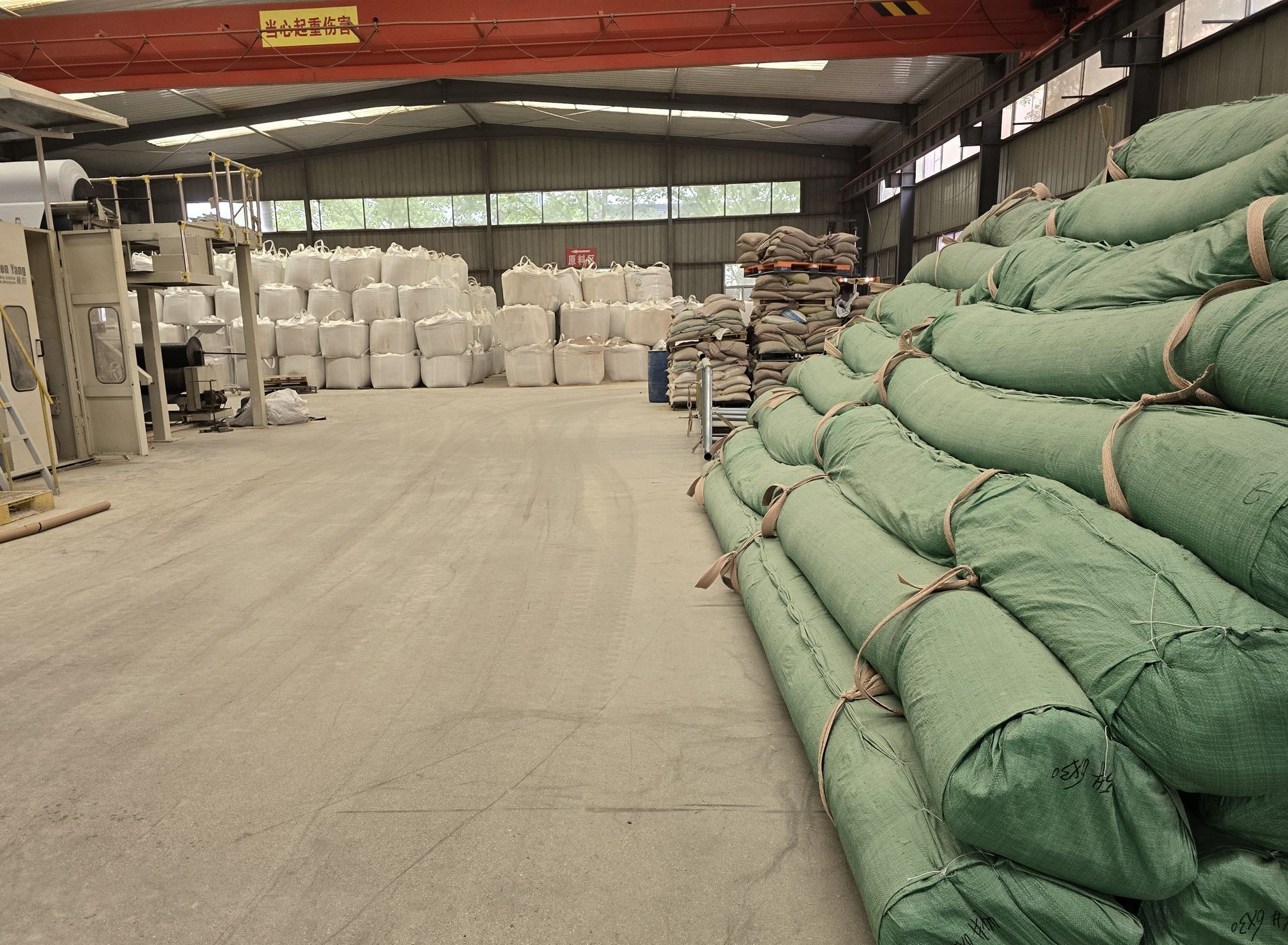
Geotextile is one of the most cost-effective tools in civil engineering — yet it is frequently mis-specified. This guide explains the five functions (filtration, separation, reinforcement, drainage, protection), the difference between nonwoven and woven, and the weight ranges that work for each job.
1The Five Functions of Geotextile
| Function | What it does | Typical application |
|---|---|---|
| Filtration | Lets water pass, holds soil particles back | Drainage trenches, retaining walls, coastal works |
| Separation | Keeps two soil layers from mixing | Road subgrade on soft clay, rail ballast |
| Reinforcement | Adds tensile strength to the soil | Steep slopes, embankments, unpaved roads |
| Drainage | Conducts water in-plane | Behind retaining walls, below liners |
| Protection | Cushions a geomembrane from punctures | Under HDPE liner on rocky subgrade |
2Nonwoven vs Woven
- Nonwoven (needle-punched): thick, permeable, high elongation. Best for filtration, separation and protection — it "drapes" over irregularities and blocks fines. Typical 100–800 g/m².
- Woven (slit-film / monofilament): strong in one or two directions, lower elongation, thinner. Best for reinforcement where tensile strength is the goal.
- Combination: many projects use woven for strength + nonwoven for filtration in the same section.
3Weight Selection
| Weight | Best for |
|---|---|
| 100–200 g/m² | Light filtration, temporary erosion control |
| 200–300 g/m² | Standard separation & filtration under roads, drains |
| 300–400 g/m² | Heavier separation, moderate reinforcement |
| 400–600 g/m² | Geomembrane protection on rough subgrade |
| 600–800 g/m² | Heavy reinforcement, high puncture risk |
4Filtration: Getting the Opening Size Right
- Filter criterion: geotextile apparent opening size (AOS) should be smaller than the soil's d85 but large enough not to clog.
- Permeability must exceed soil permeability so water moves freely without head build-up.
- Nonwoven geotextile behind a retaining wall drain keeps the aggregate clean for decades — the single most common fix for clogged drains.
5Reinforcement & Separation in Roads
- On soft ground, lay geotextile between subgrade and fill: it stops the two from mixing and reduces fill loss by 20–40%.
- For unpaved roads, the geotextile adds a tensile membrane that spreads wheel loads — fewer ruts, less maintenance.
- Overlap 300–500 mm at joints (or sew/join woven panels); anchor the edges so wind doesn't lift the roll before cover.
6Protection Under Geomembranes
- Under HDPE liner on stony or rough subgrade, a 400–600 g/m² nonwoven cushion is the cheapest insurance against punctures.
- It also protects the liner during cover-soil placement: machinery walking on the liner damages it; the geotextile spreads the load.
- Specify a geotextile with high CBR puncture resistance (not just mass) for protection duty.
Fig. 1 Three common duties: road separation, trench filtration, and liner protection (schematic).
7Installation Notes
- Unroll without stretching or folding; lap 300–500 mm (sew or heat-bond woven where loaded).
- Place cover within days — UV degrades polypropylene and polyester geotextiles over months of exposure.
- On slopes, anchor the top edge first and work downhill.
- Inspect after placement: a torn panel in a drainage layer undoes the whole filter design.
Cost-saving tip: don't overspec mass — a 200–300 g/m² nonwoven covers most separation and filtration duty; 400+ g/m² only pays off where puncture or heavy reinforcement is real.
Need Geotextile for a Project?
Send the application (road, drain, liner protection, slope) and the expected loads — we recommend the right type and weight, with FOB quote in 24 hours.
Email Us Request a Quote